Running a childhood cancer foundation: what I need to know about human resources
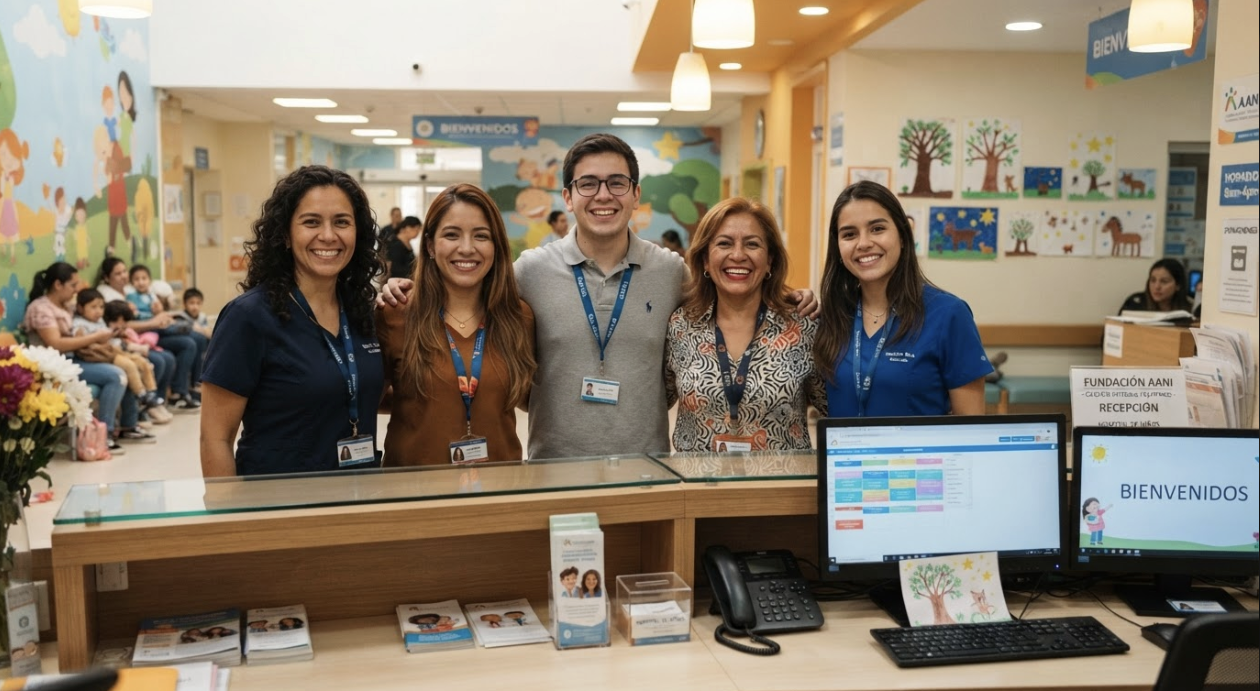
People who work or volunteer in a childhood cancer foundation are truly special. It is not work that everyone can do. It takes a unique combination of compassion, emotional strength, patience, and resilience to walk alongside children with cancer and their families every day. For many, it is more than a job or volunteer role, it is a calling. These individuals support families during some of the most difficult moments of their lives, while still bringing hope, comfort, and dignity to children in treatment.
The work requires special skills such as empathy, active listening, sensitivity, professionalism, and the ability to remain emotionally present even in heartbreaking situations. It also requires the ability to celebrate small victories, offer encouragement during uncertainty, and build trust with families from all levels of society.
What makes these staff members and volunteers remarkable is that, despite the challenges and emotional demands, they continue to serve with open hearts, dedication, and kindness. Their work changes lives, not only through practical support, but through the compassion and humanity they bring every day. Therefore, Human Resources is one of the most critical parts of running a successful childhood cancer foundation. If your people systems are weak, your programmes will struggle no matter how good your mission is or how dedicated your team is.
Your programmes support children, but your people deliver these programmes. Strong HR is what turns good intentions into real, consistent impact.
What you need to know
In the beginning, your team might be small, but roles must still be clear. Avoid “everyone does everything” - it leads to burnout and poor accountability. Core roles to consider are a Programme Coordinator to run the services, a Social Worker to provide psychosocial emotional support to the patients and their families, a Finance or Administration Officer and a Fundraising or Partnerships lead- even if this is initially only a part-time position.
When you hire staff, you need to hire for mission and capability. Working in childhood cancer support is emotionally demanding. Find staff who shows compassion, but who are also professional. Experience in health, social work, or community work is an advantage. Emotional resilience and ethical integrity are strong attributes. Recruitment of staff for your foundation must align with labour principles under the International Labour Organization (ILO).
Employment contracts are non-negotiable, and every staff member must have a written employment contract, a clear job description, and defined Key Performance Indicators (KPIs). Staff performance must be regularly assessed against their KPIs, and employees must be held accountable for achieving agreed performance standards against the programmes your organisation offers.
Offer a salary that is in line with foundations, NGOs, or charity standards in your country. Benefits must be defined, working hours and leave should be in line with your HR Policy and the labour law. This is important to protect both the organisation and the employee. Adhere to your country’s payroll and legal compliance regulations in order to avoid serious legal and financial risk.
You need a simple system to track staff performance, have regular check-ins, and do an annual performance review with all your staff. Regular check-ins with staff would help you to monitor if your organisation achieved programme outcomes.
Every NGO, no matter how small, must have a basic HR Policy that is aligned with best practice and labour regulations. Core policies should include recruitment and selection, code of conduct, leave policy, disciplinary procedures, grievance policy and a child protection or safeguarding policy which is critical for childhood cancer foundations.
To safeguard and protect your beneficiaries every staff member and volunteer must be carefully checked, reviewed, or evaluated to make sure they are honest, loyal and suitable to work in your foundation. Safeguarding procedures are the systems that ensure everyone is safe, protected, and treated with dignity in your foundation. Therefore before hiring (staff or volunteers) background checks regarding criminal records are non-negotiable. Vetting checks which include educational verification, employment history, reference checks, credit checks and social media screening are also essential.
Staff well-being when working in a childhood cancer environment is vital. Your team will deal with seriously ill children, death and dying and psychosocial and emotional challenges. Without support burnout is inevitable. You should provide regular debriefing, counselling if needed, regular supervision for social workers, manageable and reasonable workload, time off and emotional support after traumatic cases.
Foundations rely heavily on volunteers and to protect the volunteer and the organisation, foundations need a well-structured, well-managed volunteer programme. Volunteers should never replace critical roles but should enhance them.
Values and a positive organisational culture matter more than policies. Leadership should model organisational values. Involve your team in identifying and defining organisational values, as this creates ownership, encourages participation, and secures greater buy-in and commitment from staff.
Invest in your team by offering training, skills development and capacity building opportunities. A skilled and empowered team strengthens organisational impact and improves the quality-of-service delivery.
Detailed and proper record keeping and documentation is essential for compliance and audits. Personal documents must be securely filed and locked away in accordance with HR regulations and the Protection of Personal Information requirements.
Avoid common HR mistakes such as hiring too quickly without clearly defined roles, failing to implement employment contracts or policies, neglecting staff wellbeing, over-relying on volunteers, and lacking proper supervision and accountability.
Your HR starter checklist should include the following:
□ Job descriptions must be defined.
□ Basic HR policies should be in place and checked against your country’s labour law and legal requirements.
□ Safeguarding policy must be implemented.
□ Payroll compliance must be set up.
□ Performance management is important because it helps ensure that the organisation achieves its mission, uses resources effectively, and remains accountable to donors, beneficiaries, and other stakeholders and should be implemented from the start.
□ Staff support mechanisms must be in place, and ongoing care for caregivers and volunteers should be provided and actively maintained.
The following statements in proposals will give your organisation credibility:
- In accordance with the Charities Aid Foundation (CAF) and the International Federation of Red Cross and Red Crescent Societies (IFRC), our HR policies follow international best practices for recruitment, performance management, and staff support.
- Our Child safeguarding measures adhere to internationally recognised standards, including those of the United Nations Children’s Fund (UNICEF) and the International Society of Social Pediatrics and Child Health (ISSOP).
- Staff wellbeing, supervision, and burnout prevention are implemented according to global guidelines of the WHO.
Read more
Human Resources Management in Nonprofits
- Stephen Sidebottom. 2026. How HR Leaders Can Measure People Risk and Strengthen Organizational Resilience Kogan Page. https://www.koganpage.com/hr-learning development/how-hr-leaders-can-measure-people-risk-and-strengthen-organizational resilience
- Timothy Bartram, et.al. 2017. The growing importance of human resource management in the NGO, volunteer and not-for-profit sectors. The International Journal of Human Resources Management. https://www.tandfonline.com/doi/full/10.1080/09585192.2017.1315043#d1e185
- Dr. Surekha - Vaidya. 2022. Management of Human Resources in NGOs. International Journal of Education, Modern Management, Applied Science & Social Science (IJEMMASSS). https://www.inspirajournals.com/uploads/Issues/87540007.pdf
- Rehema C. Batti. 2014. Human resource management challenges facing local NGOs. Humanities and Social Sciences. https://www.academia.edu/57875365/Human_Resource_Management_Challenges_Facing _Local_NGOs
Volunteer Management
- Volunteer Management Centre (n.d.) Volunteer Policy and Best Practices: International guidance for structured volunteer roles, agreements and supervision. https://www.volunteermatters.com/blog/volunteer-management
- Volunteering policy. 2022. International Federation of Red Cross and Red Crescent Societies (IFRC). https://www.ifrc.org/sites/default/files/2022-10/20220822_IFRC Volunteering-Policy-EN.pdf
- Ultimate Guide for Nonprofits. Volunteer Hub. https://volunteerhub.com/blog/the ultimate-guide-to-volunteer-management
- Jennifer Loftus. 2025. Best Practices for Nonprofit HR: Managing Volunteers. Civic Champs. https://www.civicchamps.com/post/best-practices-for-nonprofit-hr-managing volunteers
Was this article helpful?
Related Articles
What is a patient support organisation?
One of the guiding principles of all those involved in childhood cancer is that the patients and their families should never feel alone in their difficult times. In 2000, Mark Chesler and Sara Eldridge launched the concept ‘You are not alone’. Internationally this term has been used by childhood cancer foundations to make parents, survivors, patients and their dear ones feel loved and cared for.

Why do we need to start a childhood cancer foundation?
Many parents who have been through the childhood cancer journey have a need to give back either to honour their child, to support other families facing the same journey, to address the unmet needs in the health system, to raise awareness about childhood cancer, to raise funds for treatment or supportive care programmes, to provide sense of purpose and healing, to build a supportive community, to advocate for the children’s rights, to fill the gap left by their own experience or the contribute to research and improved outcomes.
I want to start a childhood cancer foundation
Many of Childhood Cancer International (CCI) members established sustainable and successful foundations. You are welcome to reach out to CCI for mentorship and knowledge sharing. You don’t need to reinvent the wheel. Remember, you are not alone and CCI is there to support and guide you.