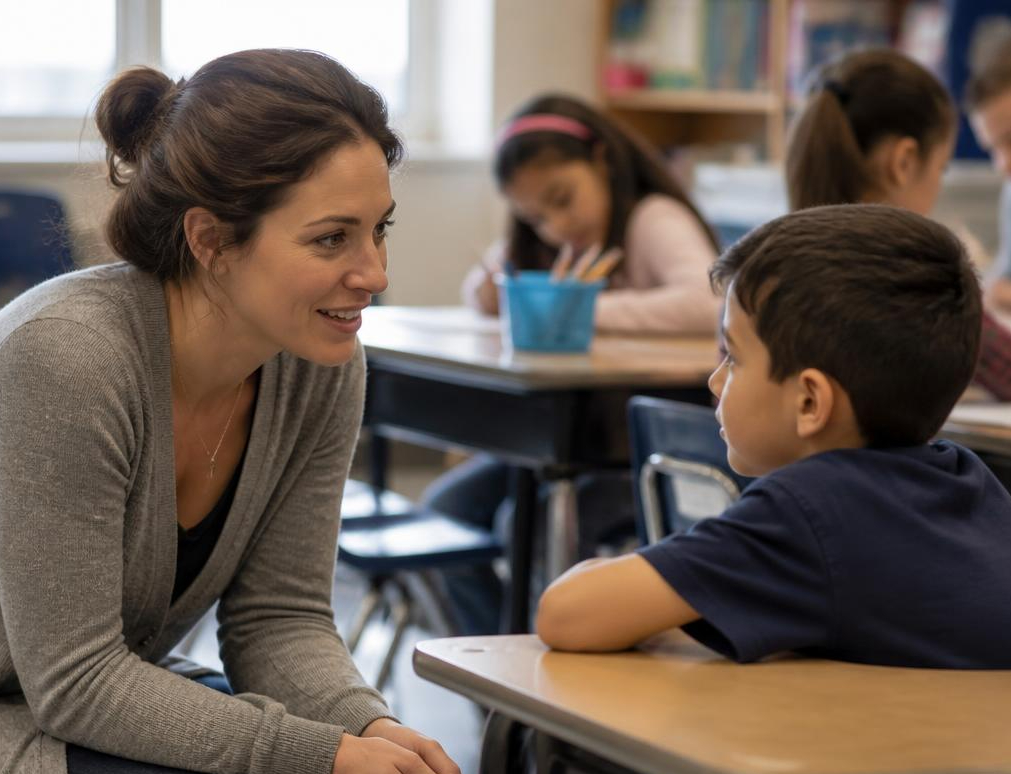
What should I be alert for and who should I contact if I see early warning signs that could indicate a serious health concern
Teachers play an important role in recognising changes in a child's health. development and functioning. Your role is to observe, document, communicate concerns, and facilitate referral, not to diagnose. Early medical assessment of persistent or unusual symptoms can help ensure that children receive appropriate care as soon as possible.
Helpful information for teachers
If you notice persistent or unusual symptoms that could indicate a serious health concern you should start by documenting your observations. Record what you have noticed, when it occurred, and how often it has been observed. Stick to factual observations rather than assumptions or diagnoses.
Inform the appropriate school personnel and follow your school's procedures by informing the principal, school nurse, school counsellor, or designated safeguarding/well-being staff member. Communicate concerns with the parent or guardian through the school's established communication channels. Explain the observations factually and encourage medical assessment. If concerns persist, encourage prompt medical evaluation. It is not the role of the teachers to diagnose any medical condition. Parents or guardians should be advised to consult a healthcare professional for assessment.
Continue to monitor and support the learner. Be attentive to changes in the learner's health, attendance, participation, or well-being and share relevant observations with the appropriate school staff.
A learner should be referred for medical evaluation if symptoms are persistent, unexplained, or worsening – the following are possible warning signs for urgent attention: MOST CHILDREN WITH THESE SYMPTOMS DO NOT HAVE CANCER, BUT PERSISTENT OR UNEXPLAINED SYMPTOMS SHOULD ALWAYS BE MEDICALLY ASSESSED.
- Unexplained weight loss.
- Persistent fatigue or unusual pallor.
- Frequent or unexplained bruising or bleeding.
- Persistent bone, joint, or limb pain.
- Recurring fevers without a clear cause.
- Persistent headaches, especially with vomiting.
- Swollen lymph nodes that do not resolve.
- An unusual lump or swelling.
- Changes in vision, balance, or coordination.
If teachers suspect an early warning sign, they should firstly contact the learner's parent or guardian (following school procedures). The school principal or designated safeguarding/well-being lead, or the school nurse or school health services (if available) should be informed. The school could guide or assist the parents to a healthcare professional who could assist and refer the parents to a specialised treatment unit.
Read more
- Cancer Research UK. n.d. Signs and symptoms of cancer in children. https://www.cancerresearchuk.org/about-cancer/childrens-cancer/symptoms
- American Childhood Cancer Organisation (Ruth Hoffman). 2017. Educating the child with cancer. A guide for parents and teachers. https://www.acco.org/wp-content/uploads/2025/03/ECWC-2027_PDF_Complete.pdf
- The Children’s & Young People’s Cancer Association. n.d. I am worried my child has cancer. https://www.cclg.org.uk/about-cancer/my-child-and-cancer/i-am-worried-my-child-has-cancer
- CHOC Childhood Cancer Foundation SA. n.d. The Siluan Early Warning Signs of Childhood Cancer. https://choc.org.za/childhood-cancer-early-warning-signs/
- Megan Drummond. 2024. Early Childhood Cancer Signs. When to Worry. UVA Health. https://www.uvahealth.com/healthy-balance/early-childhood-cancer-signs-when-to-worry
Was this article helpful?
Related Articles

Basic information about childhood cancer
Cancer begins with something almost invisible — a single cell that loses its ability to grow in an orderly way. As that cell multiplies unchecked, it can form tumours, crowd out healthy tissue, and in some cases spread to other parts of the body.
I have a child with cancer in my class
When a child is diagnosed with cancer, it is not only a traumatic time for the teacher and the class, but it impacts the whole school and community.
It is, therefore, important that educators understand their own emotions and the nature of the illness to adequately support the child and family. Knowledge about cancer, what the school should know during and after the treatment is important to best support the family.

Helping your classroom through a cancer diagnosis
When a student in your class has cancer, you don't need to have all the answers — but a little preparation can go a long way. The following tips offer gentle, age-appropriate ways to explain what cancer is, respond to children's questions, and help the classroom remain a safe, kind, and supportive place. Whether you're having the first conversation or checking in weeks later, these ideas can help guide you.