
Who is the team responsible for the medical care of my child?
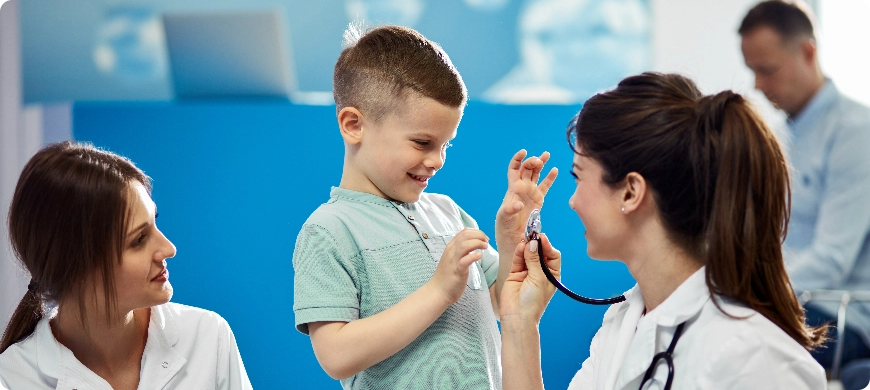
A child with cancer will always have a multidisciplinary team, and within that, each discipline (like nurses, doctors, therapists) may function as intra-disciplinary sub-teams to ensure consistency. Not all countries or hospitals may have all the services, however in the ideal world the following will be the team responsible for the medical and psychosocial care of your child.
Multidisciplinary Team (MDT) is the most common approach in paediatric oncology. Each professional from different specialties works together, sharing expertise, but each keeps their own professional boundaries. The child and family are always at the centre.
Typical members of a childhood cancer MDT:
- Paediatric Oncologist / Haematologist leads the diagnosis and treatment.
- Paediatric Surgeon / Neurosurgeon / Orthopaedic surgeon is responsible for tumour removal or biopsies.
- Radiation Oncologist decides if radiotherapy is needed.
- Radiologist and Nuclear Medicine Specialist is responsible for imaging and scans.
- Pathologist / Laboratory Scientist assists with the diagnosis through biopsy, blood, and marrow samples.
- Nurses (Oncology nurses or nurse practitioners) are responsible for daily care, monitoring, education, family support.
- Pharmacists ensure that chemotherapy is mixed correctly, and drug safety is applied.
- Psychologist or Child Psychiatrist looks after the emotional and mental health support of the child and family.
- Child Life Specialist is a trained professional who helps children, and their families cope with the stress, fear, and challenges of hospitalisation and cancer treatment. Their role is crucial because treatment can be painful, confusing, and overwhelming for children of all ages.
- Social Worker supports the patient and family from diagnosis throughout the journey and assists with practical support, financial resources and family counselling.
- A Patient Navigator is a professional who helps children with cancer and their families move through the complex medical system. Their job is to make sure no family feels “lost” during diagnosis, treatment, or survivorship.
- Physiotherapists and Occupational Therapists help the patients and survivors with rehabilitation, mobility and daily functioning.
- Dietitian / Nutritionist assists with nutrition during and after treatment.
- Palliative Care Specialists manage symptoms and quality of life support.
- Educator / Hospital School teacher assists with the educational needs, continued learning and cognitive development of the patient.
- Spiritual Care / Chaplain for families who seek it.
- Childhood Cancer Foundations are non-profits often established by parents who have been through the journey and are willing to assist a child and family with practical and emotional support; raise awareness about childhood cancer and early diagnosis and to advocate for the human rights of children and teenagers with cancer.
An Intra-disciplinary team (IDT) refers to a team made up of professionals from the same discipline (e.g. all nurses, or all doctors) who work together, share knowledge, and coordinate care.
Examples of an Intra-disciplinary team are:
- A group of oncology nurses planning pain management, chemotherapy administration, and patient education together.
- A team of paediatric oncologists reviewing cases and treatment protocols in tumour board meetings.
- A group of psychologists providing therapy, play therapy, and family counselling, while ensuring consistent approaches.
Below are some resources helpful to learn more about the medical team.
1) The Children and Young People’s Cancer Association. (n.d.). The importance of multidisciplinary teams working in children’s cancer care.
2) Miren Taberna, et.al. March20,2020. The Multidisciplinary Team (MDT) Approach and Quality of Care. [A review of how integrating different specialist disciplines improves cancer care, including supportive and allied health services.] Frontiers.
Was this article helpful?
Related Articles

Educating your community of family and friends
Sharing a child’s cancer journey with one’s community can raise awareness, build understanding, and gather emotional or practical support. However, it is equally important to do so in a way that protects the child’s privacy and the family’s emotional wellbeing.
Message from parents to parents
Hearing that your child has cancer is one of the most overwhelming experiences a parent can face. It often triggers a series of emotional and psychological reactions, commonly described in phases like the stages of grief, though each parent may experience them differently.

What are the hinderances to childhood cancer treatment?
The path to treatment is not always straightforward. For many families, there are barriers along the way — and recognising them in your own context is a powerful place to start.